At Cirencester College, we are ambitious for your future. Whether you are studying A-levels or a mixed programme, work experience (WEX) is a vital part of your journey. This isn’t just a requirement; it is a massive opportunity to test-drive your dream career, build a professional network, and develop the “transferable skills” that employers actually want. Plus, for those looking at university, work experience is now a dedicated part of the UCAS application, so getting it right now will give you a major head start later.
Kickstart Your Future: Your Guide to Work Experience
Safety First (For Parents & Carers): Before any placement starts, the student, the employer and the parent/carer must complete a Health & Safety form. This ensures the employer has the right insurance and that there is a designated person responsible for your child’s wellbeing while they are on-site. Please fill in the form using the link below:
How It Works: The Basics
Your placement needs to match your career goals. For example, if you want to be an accountant, you should look at local firms or businesses.
Your Personal Tutor will be able to guide you through which placements are appropriate and which aren’t, however, it is your responsibility to check the placement is prepared to support you through your work experience. This means communicating with the employer yourselves and asking them to complete the health and safety form ahead of your placement.
How many hours do I need?
- A-levels and Mixed Programmes: Flexible, but we set aside 4 days for you to complete your placement in the run up to February half-term.
- APP: 4 days in the run up to February half-term.
For courses that have a mandatory work placement:
- Vocational: Hours depend on the course, so check with your teacher.
- T-levels: Minimum 315 hours (except for Early Years, where you need to complete 750 hours).
- Level 2: Hours depend on the course, so check with your teacher.
When does it happen?
We set aside a specific week in the college calendar for A-level and Mixed Programme students, so you don’t miss any lessons – this is usually just before February half term. However, if you find an amazing opportunity that doesn’t fit those dates, you can complete it during half-term or after college hours.
T Level Industry Placements
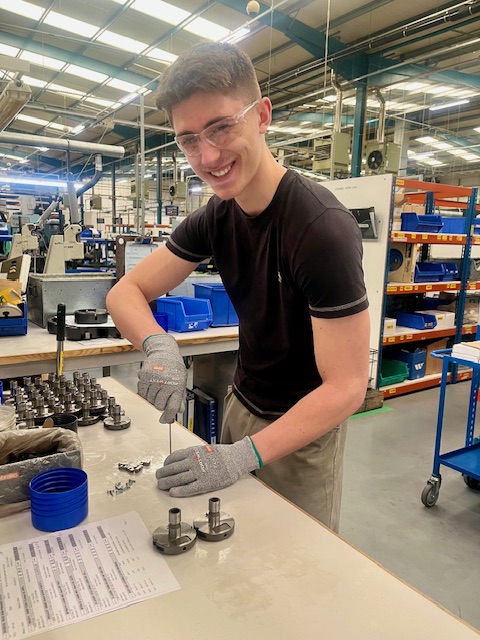
T Level students complete a compulsory Industry Placement, which forms part of the qualification and follows a different process from standard work experience. Your placement hours, employer arrangements and paperwork will be managed in line with T Level requirements, and the Work Placement team will guide you through the process.
For full details, please refer to the T Level Industry Placement Guide or speak to your course tutor.
You’re in the Driving Seat
This is your experience, so you are responsible for making it happen! Just like applying for a real job, you will be the one contacting employers, making the phone calls, and keeping track of your hours. This “real-world” practice is exactly what you need to be ready for life after college.
If you are a young person with additional needs, please do speak to Caitlin, our Employability Support Worker, who you can find on the first floor of P Block (above the refectory) for extra information and help with sourcing your placement.
Safety First (For Parents & Carers): Before any placement starts, the student, the employer and the parent/carer must complete a Health & Safety form (found on the back page of this booklet). This ensures the employer has the right insurance and that there is a designated person responsible for your child’s wellbeing while they are on-site.
Your 9-Step Success List
- Pick your industry: Where do you see yourself in five years?
- Update your CV: Make sure it highlights why you’re interested in that specific field. Use the template on Unifrog!
- Reach out: Contact employers directly.
- Seal the deal: Confirm the placement with the employer.
- Paperwork: Get the employer to complete the Health & Safety form.
- Double-check: Confirm your dates and hours before you start.
- The Placement: Show up, work hard, and learn as much as you can!
- Log and Reflect: record your experience in Unifrog, noting the skills you’ve developed.
- Say Thanks: Ask for feedback via our form and send a “thank you” email.
Pro-Tips for Success
- Keep your CV handy: Save a copy on your phone so you can email it to an employer the moment an opportunity pops up!
- Network: Talk to your parents, friends, and neighbours. You’d be surprised how many great placements come from people you already know.
- Go Digital: Create a professional LinkedIn profile to build an online presence and use Indeed to see which local companies are hiring—sometimes a WEX placement can even turn into a part-time job!
- Research: Use the Unifrog and the Prospects website to find volunteeringand niche work opportunities.
The Fine Print
As a College, we are committed to ensuring that our students leave here with more than just their qualifications – we understand the importance of being well prepared for whatever those next steps look like, and work experience is a brilliant and tangible way of developing the skills needed to make a success of their next steps.
Our Careers Strategy is shaped by the Gatsby Benchmarks to ensure every student receives a well-rounded, meaningful careers education.