DO NOT DELETE OR EDIT THIS ROW OR ITS CONTENTS

Classical Civilisation (Classics) is the original Humanities subject - the foundation of Western literature, politics, philosophy and art. This course immerses you in the fascinating worlds of Ancient Greece, Rome and Persia, exploring epic literature, powerful leaders, myth, religion and the rise and fall of empires.
A dynamic and multi-disciplinary subject, Classics combines history, literature, philosophy and cultural analysis. It is highly regarded by universities for the intellectual rigour and analytical skills it develops.
Above all, Classics asks timeless questions about identity, power, belief and what it means to belong - debates that remain as urgent and relevant today as they were over two thousand years ago.
What will I study in Classical Civilisation A-level?
The course is for students interested in studying a subject that by its very nature reaches across academic divides to link political, social and military history, philosophy, literature and the arts. Students may come from a humanities background and want to study a subject that reaches across the disciplines, or hail from a sciences background and want to widen their studies by taking on a broad-ranging, multi-disciplinary subject like Classics.
Classical studies is very multi-disciplinary in nature, and provides an excellent springboard for debates that draw parallels with contemporary issues such as gender, identity, ‘othering’, and politics.
This course introduces a fascinating combination of topics centred on ancient Greece and Rome. Some find the idea of Classics at A Level intimidating, but it need not be; whilst it is a rigorous academic subject, highly regarded by universities and employers, it is not a requirement to have studied the subject before or to have any knowledge of Latin or Greek (all texts studied are in English translation). The important thing is that students are ready to learn and are prepared to embrace the original humanities subject.
In the Classical Beliefs and Ideas module we study Politics of the Late Roman Republic, where you will learn about the life and times of the great Roman philosopher-statesman Cicero, his equally impressive rival Julius Caesar and their relationships with the likes of Cato, Pompey the Great, Crassus and the future Emperor Augustus as Cicero desperately attempts to save his country from a descent into chaos, conspiracy and civil war.
In the World of the Hero module you will study Homer’s Iliad, both as the epic poem set during the legendary Trojan War, and for what it tells us about ancient ideas of honour, revenge, glory and the power of the gods. This leads on to the Aeneid, Virgil’s Roman epic poem, in which Aeneas, a survivor of the fall of Troy, attempts to set up a new home: Rome. The study of the latter poem will be set against the backdrop of the rise of the Roman Empire with an in-depth study of the Emperor Augustus and his social, religious and moral reforms.
In the Invention of the Barbarian unit, you will explore the story of the struggle between the small Greek city-states and the massive Persian Empire through Herodotus’ Histories and Greek perception of the ‘barbarian’ through the study of two great plays (Aeschylus’ Persians and Euripides’ Medea), and a study of the Amazons (mythical female warriors). Some consideration will also be given to the presentation of the 'barbarian' in Greek and Persian art (complemented by a trip to the British Museum). Several Greek and Persian sites of special archaeological and world heritage interest will also be investigated in depth.
As well as the history, epic poetry, plays and archaeology already mentioned, over the two years you can expect to study topics such as philosophy, religion and Roman law as well.
Entry Requirements
At least five GCSEs at Grade 4 or above, all from the core subjects which includes both English Language and Math (and Grade 4 in History if taken at GCSE). Due to nature of course content, we would recommend a higher grade in English Language than a 4
Please do refer to Homer's Iliad and Virgil's Aeneid for a taste of some of the literature that is covered in Classics.
How will I learn?
Whilst Classics is primarily a text-based subject, and reading/literature analysis is an important element of the course, you will learn through varied activities designed to develop knowledge, understanding and skills. You can expect a variety of groupwork and self-led activities, as well as traditional short lectures, analysis of visual evidence (art and material culture), and close analysis of modern scholarship. All reading of core texts associated with the course must be completed in your own time and in preparation for lessons.
In additon to this, a trip to the British Museum at the end of year one is a very useful starting point for the Invention of the Barbarian module which draws on a set of prescribed material sources (Greek and Iranian) that are housed in the museum.
How will I be assessed?
There are 3 exams at the end of year 2.
Two of the exams (Politics of the Late Roman Republic; and the Invention of the Barbarian) are worth 75 marks and last 1 hour and 45 miutes. These exams are each worth 30% of the total A-level.
There are five question types in these exams, they are:
• short answer question
• 10 mark stimulus question
• 10 mark ideas question
• 20 mark essay
• 30 mark essay.
The World of the Hero exam is worth 100 marks and lasts 2 hours and 30 minutes. This represents 40% of the total A-level.
There are three question types in this exam, they are:
• 10 mark stimulus question
• 20 mark essay
• 30 mark essay.
Any trips?
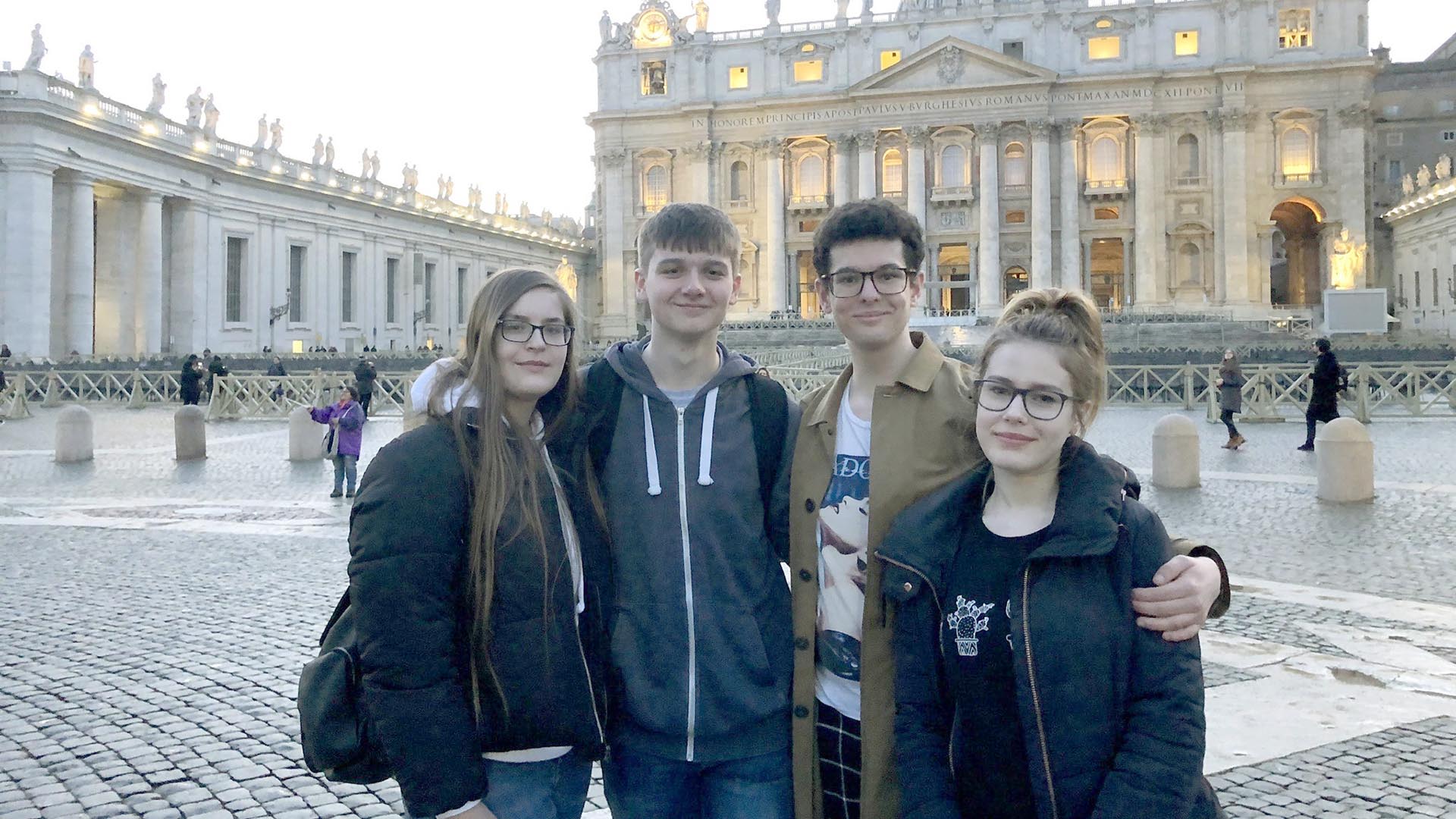
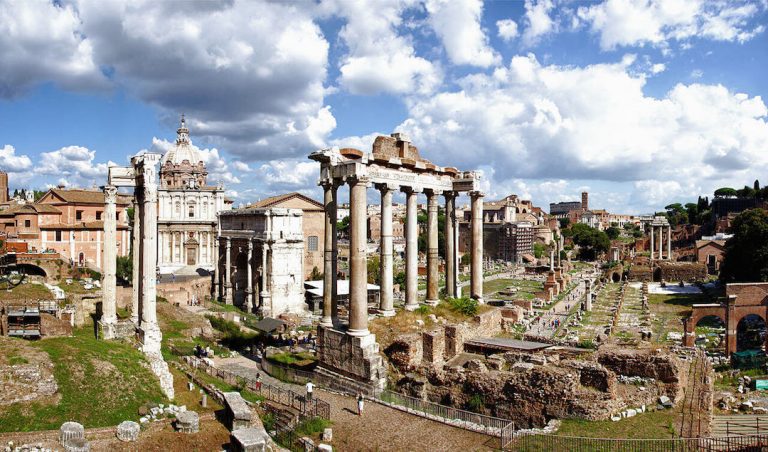
Classics leads a (non-compulsory) trip to either Greece or Italy on a rotational basis. Recent trips have included a tour of Greece, including sites such as: Athens, Sparta, Delphi, Corinth, Thermopylae and Olympia; and Italy, including sites such as: Rome, Ostia Antica, Pompeii, Herculaneum, Paestum and Baiae.
These trips have been enormously popular and help to bring learning vividly to life.
We also aim to run a trip to the British Museum at the end of year 1 to look at Greek and Persian artefacts that we study in depth in year 2; as well as trips to Warwick Ancient Drama Festival, and Cirencester's Roman amphitheatre.
Are there any costs involved?
There will be costs associated with trips (the majority of which are non-compulsory).
There will also be a charge for course workbooks.
Device Requirements
COURSE_DEVICE
If you already own a device that meets the technical requirements of your course, you are welcome to bring it with you to college.
If not, more information on a convenient rental and help-to-buy scheme designed specifically for Cirencester College students is linked below.
FAQs
What enrichment activities are offered?
The languages and cultures of ancient Greece and Rome have shaped and continue to shape many aspects of the modern world: literature, law, drama, architecture, philosophy and religion. Classical Civilisation at Cirencester College offers students the opportunity to explore and engage with the classical world and develop their understanding of how ancient Greece and Rome continue to influence modern life. Enrichment opportunities include:
- Latin enrichment
- Museum trips (British Museum for Greek and Persian material culture, for example. Additional trips also organised for special exhibitions); as well as trips to other local heritage sites
- Overseas trips: previous destinations have included Italy and Greece
- Work experience. Recent work experience has included gaining valuable experience in the heritage sector at Cirencester’s Corinium Museum. We also work closely with the Cirencester History Festival.
- Theatre trips. Recent plays have included Oedipus Rex, Antigone and the Bacchae
- Visiting speakers. Recent speakers: Edith Hall on the Invention of the Barbarian; Ed Bispham on the Late Roman Republic
What work experience opportunities are there?
In previous years a number of students have had the opportunity to complete some voluntary work/work experience in the heritage sector. We also work closely with Cirencester History Festival which provides a range of opportunities.
Is there a lot of reading involved in the study of Classical Civilisation?
Yes. We read Homer's Iliad, Virgil's Aeneid, 2 Greek plays, Herodotus' Histories (extracts), Roman oratory and letters, and various critical texts and scholarship.
Please take a look at the Homer and Virgil texts ahead of time to help gauge the level of reading.
Which courses complement Classics?
There are a variety of courses that complement the study of Classics. Most students studying Classics also study other humanities subjects such as: Ancient History, History of Art, History, Religious Studies and Politics. Studying English Literature alongside Classics is also very popular due to our focus on classical literature. Students who study Fine Art and Drama are also often drawn to Classics due to our study of material culture and Greek theatre.
However, Classics also sits alongside science and maths programmes where students decide to take one humanities subject to demonstrate a wider set of skills. Classics is particulary good in this capacity as it is a multi-disciplinary subject which develops a wide range of skills.
Awarding Body
OCR
Available As
A Level
[56 UCAS pts. available]
[56 UCAS pts. available]

Add to Application
What can I do after I have taken this course?
Available As
A Level
[56 UCAS pts. available]
[56 UCAS pts. available]
Add to Application
DO NOT DELETE OR EDIT THIS ROW OR ITS CONTENTS
What the students say

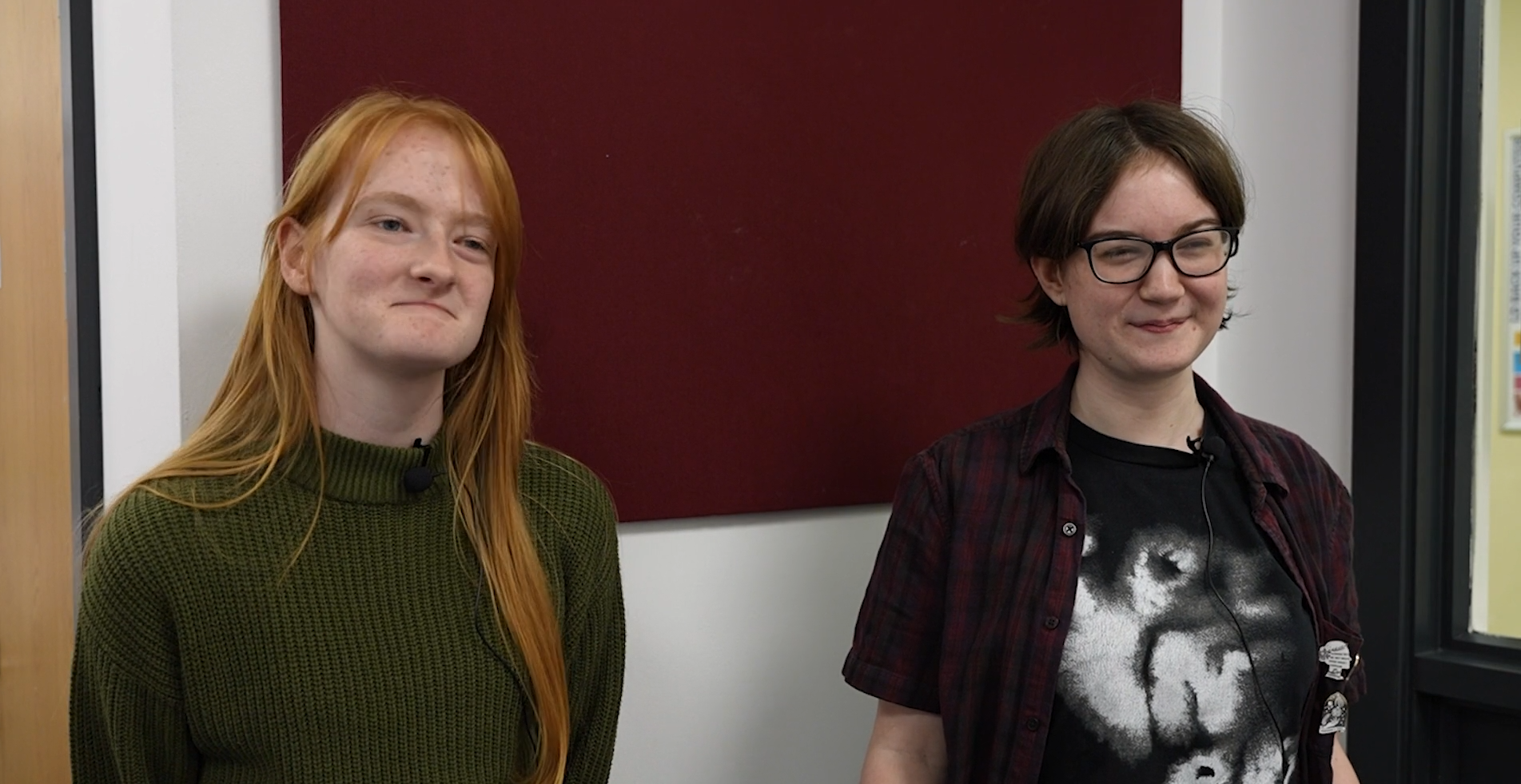
”Classical Civilisations allows me to see the importance of studying the ancient world and just how influential these civilisations were and continue to be.
Alice Watson