
Media: Broadcast and Production T-level (Content Creation and Production)

DO NOT DELETE OR EDIT THIS ROW OR ITS CONTENTS
The media industry is changing rapidly with advances in technology and online platforms allowing the distribution of content to become instant and global. You will learn about how the media operates and get a practical and theoretical introduction to the knowledge, skills and understanding of the digital media industry. You will develop an understanding of how to use graphics, video and sound to create products for specific target audiences including basic web creation. You will also develop knowledge and understanding of media pre-production, planning and production processes. You will develop transferable skills such as planning, communication, adaptability and leadership. Put your current creative and technical impulses to use and develop a platform of new skills across a range of media arts practices within our extensive production facilities and with our highly experienced, industry-focused teaching team.
What will I study in Media: Broadcast and Production T-level (Content Creation and Production)?
The broadcast media T-level is a two-year technical study programmes designed with the needs of you and employers in mind.
It will give you the skills and knowledge needed to get on in the media industry whether that's moving into the workplace, an apprenticeship or access to media courses at university.
The big difference with this course is that you will get at least 45 days practical experience with an employer working in their business. This will give you with an invaluable insight into the demands of working within the media industry.
You will study a range of practical and clasroom based technical and creative media. Alongside gaining an insight into cameras, TV studios, location filming, lighting and sound, you will also find out about your place within a thriving media economy.
Entry Requirements
At least five GCSEs at Grade 4 or above, all from the core subjects including English and Maths.
How will I learn?
During the two years students will be exposed to key knowledge and develop work skills via a wide range of practical projects involving elements such as creating a live TV show, planning and filing a documentary and other practical tasks.
Students will learn pre production planning skills including projct management and budgeting as well as research and development processes.
Practically students will develop key studio lighting and camera skills using a range of different video and audio equipment to create different forms of media content including live TV, documentary making, short films and audio products such as podcasts.
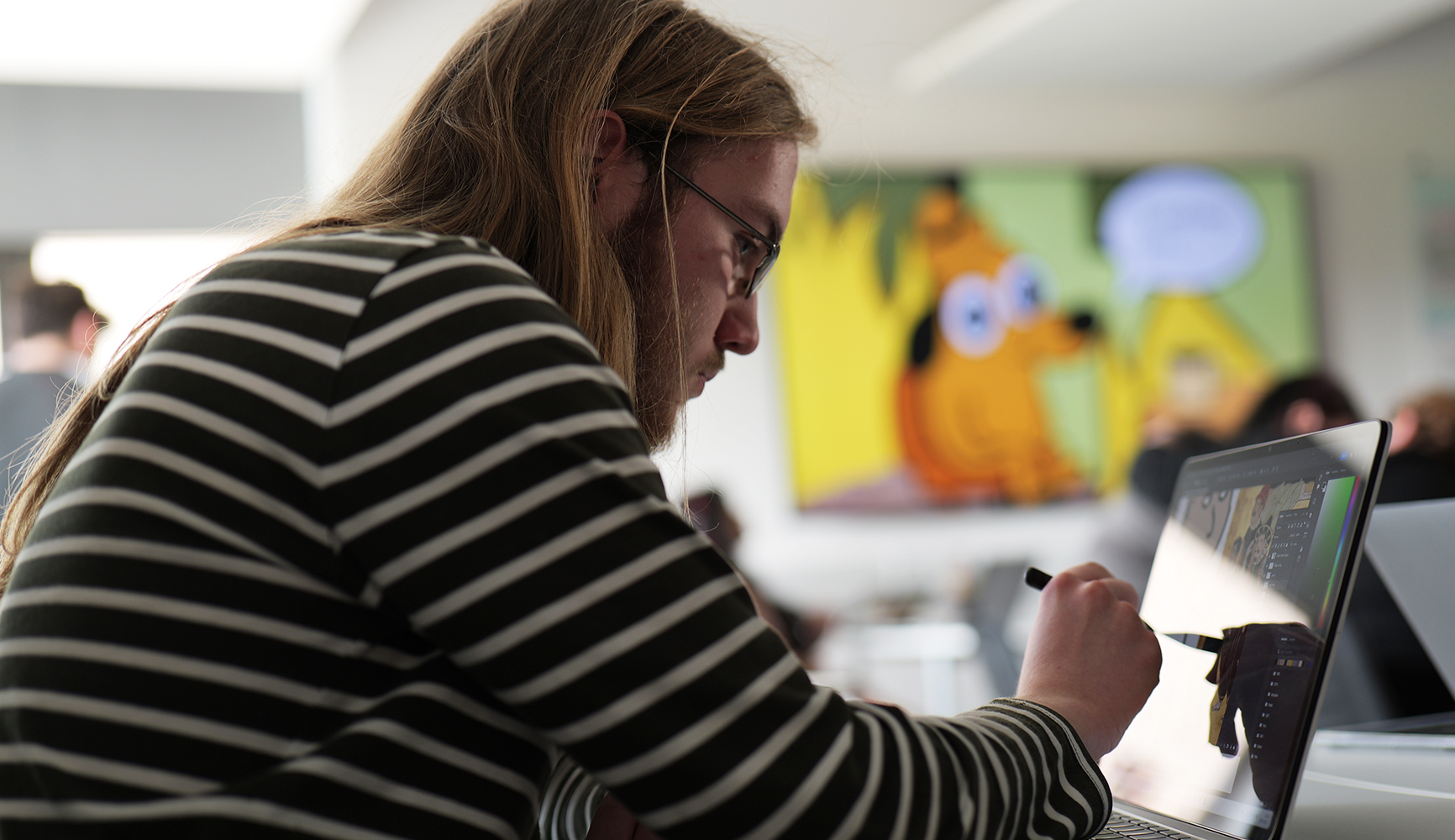
Student will learn how to use key industry software including Adobe PhotoShop and Illustrator as well as Davinci Resolve non linear editing software. Students are also expected to become proficient in professional development and cloud based IT skills.
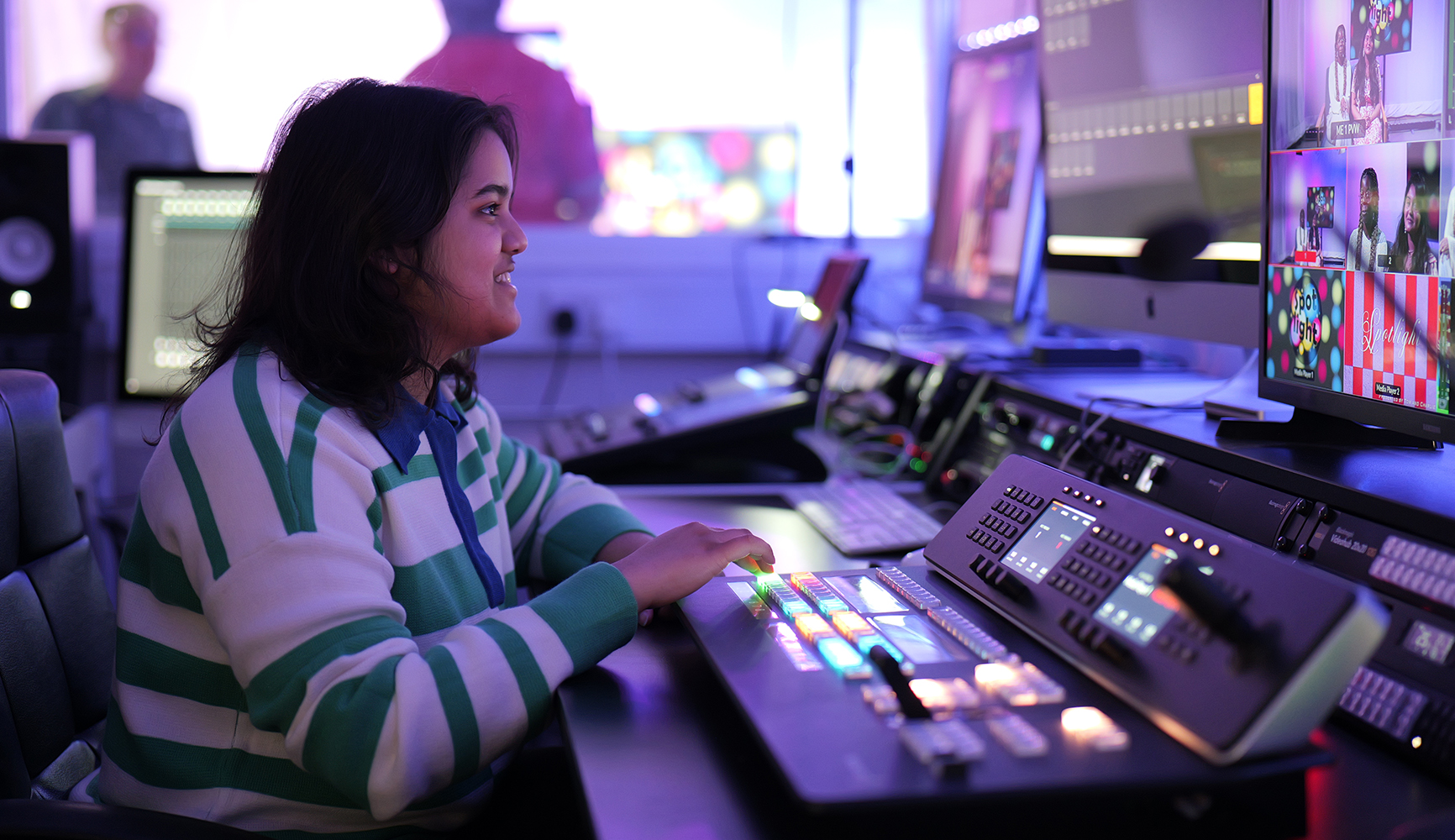
The college is proud to offer a fully equipped broadcast multi camera TV studio and fully equipped production gallery as well as extensive video and audio equipment available for student use. The Meia department also has two fully Mac equipped production areas offering pre and post production facilities. These are supported by our professional level audio recording booth.
How will I be assessed?
The T Level Broadcast media course is a complex and busy qualification that consists of four main areas all of which need to be completed in order to gain the qualification.
Industry knowledge and the ability to apply it is assessed via the Core. This consists of a wide range of units that include Personal and Professional Development, Media Legislation, Project Management, Research, Audience and Cultural Context. These topics re taught in lesson and assessed via a two and a half hour written exam sat in the second year.
In addition to the Core the Employer Set Project (ESP) is a multi week, multi task written assessment that check how students can apply their core knowledge against relevant industry scenarios. This is also sat in the second year
Key industry skills are assessed in the Occupational Specialism, a month long multi task assessment that allows students to use their developed skills and knowledge to plan and create two pieces of media content. The OSP takes place in the middle of year two.
All T Level students are required to undertake and complete 315 hours of industry work placement. This can be carried out at any time across the two years with one day a week allocated to this on the timetable. Students can also complete work over holidays and in blocks at set points in the course. The college WEX team assists students in gaining placements however all students are expected to engage with finding and accepting a placement. It is not possible to complete your T level course without tis component completed.
Any trips?
The college arranges a wide range of trip sfor T Level students including visits to trade shows and exhibitions. Each year students also have the opportunity to attned trips to Pinewood Studios to see production facilities and The Harry Potter Tour which has additional educational content for students.
The college also undertake s arange of trips to universities to allow students to experience possibel progression routes.
Are there any costs involved?
The college provides any and all specialist equpment requred to complete the course. This includes AV equipment and rooms to rent or use in lesson. In a more general sense the college does operate a BYOD (bring your own device) policy for general IT use. For media this will mean a suitable laptop for course work as well as at least one SD card for recording video and audio for transfer to computers. It is also recommended that students have some external storage to backup and copy files to. A 1tb external SSD is recommended for this.
Examples of suitable laptops for media use re:
Apple MacBook Pro Or Air, M2 or higher processor, 16GB RAM or higher, 256GB SSD or higher
Windows laptop (16GB RAM | Ryzen 5 or Intel i5 12th Gen or above)
The college does have a limited number of laptops availableto rent daily on a first come first served basis.
Device Requirements
COURSE_DEVICE
If you already own a device that meets the technical requirements of your course, you are welcome to bring it with you to college.
If not, more information on a convenient rental and help-to-buy scheme designed specifically for Cirencester College students is linked below.
FAQs
Is there much practical work involved?
Yes - lots of it! You'll be working in groups on practical projects in college and working with your employer when you're on placement.
Does doing a T Level reduce my options after college?
T-Levels are designed to give you lots of options. The natural routes will be to apprenticeships in the media industry, employment, self-employment or on to university.
How will I get my work experience?
The college has a dedicated Work Experience departmetn who help students to research and apply for placement.s They also sourse some placements which are sent to stuents, however students are expected to actively involve themselves in securing their own placment. We are just here to guide an assist.
Awarding Body
Pearson
Available As
T Level
[168 UCAS pts. available]
[168 UCAS pts. available]

Add to Application
What can I do after I have taken this course?
Available As
T Level
[168 UCAS pts. available]
[168 UCAS pts. available]
Add to Application
DO NOT DELETE OR EDIT THIS ROW OR ITS CONTENTS