

search
0

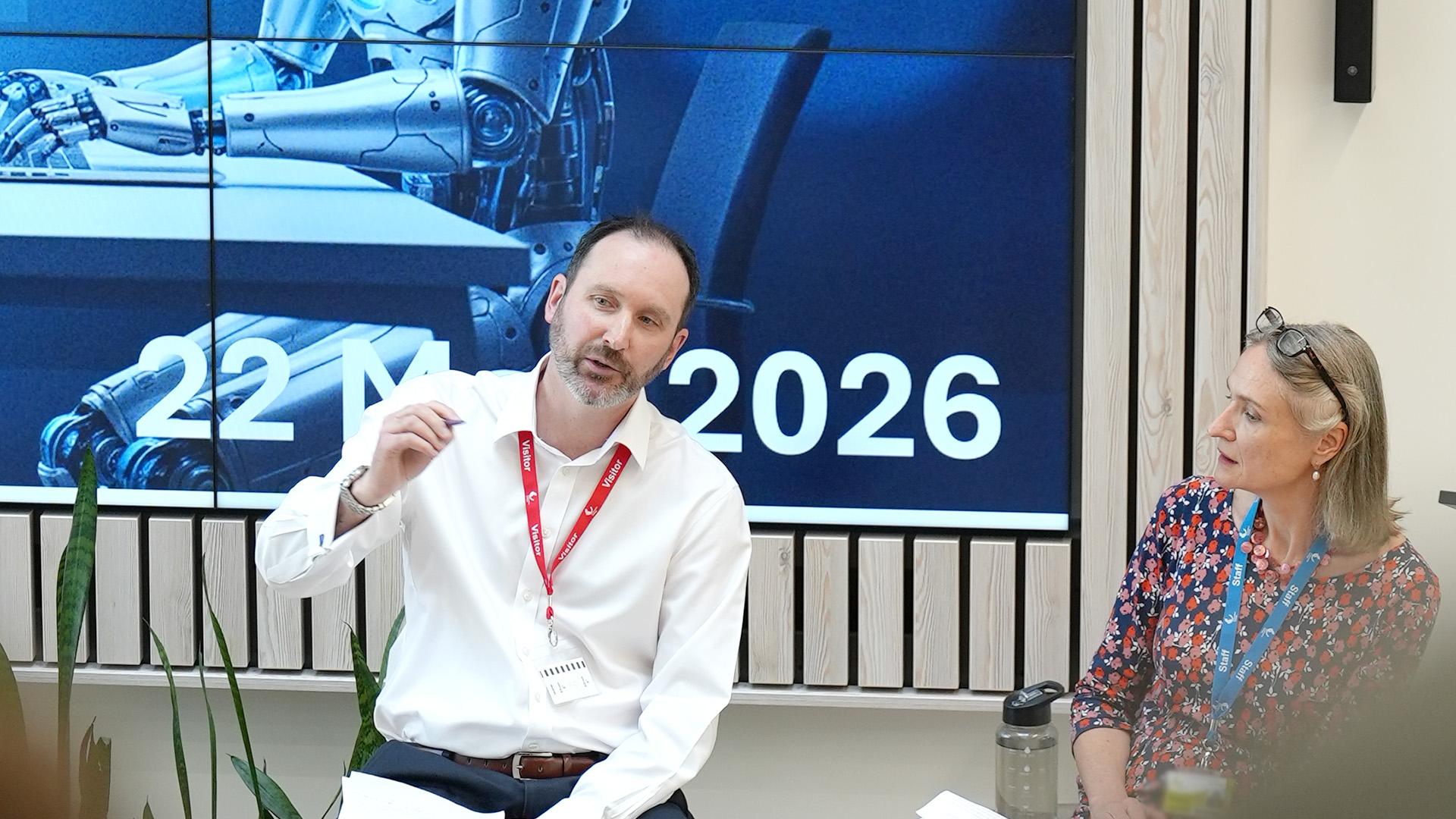
Recently, students across a range of courses explored the future of artificial intelligence in the workplace during a panel discussion examining how AI is changing careers and what it means for their future employability.

Students from the STEM, Humanities and Business faculties heard from a panel of industry experts and college staff about the opportunities and challenges created by AI and automation.

Keynote speaker Rob Stemp, a cybersecurity expert, AI advisor and technology leader, shared insights into how AI is transforming industries and changing the skills employers are looking for. He was joined by Cirencester College staff members Amanda Brookes, Bobbie Brandybuck and Ioana Bendixson, who discussed the impact of AI on education, careers and future skills.

Topics included the future of jobs in finance, accounting, journalism, teaching and technology, as well as the importance of developing adaptable skills alongside subject knowledge.

Students also had the opportunity to ask questions and take part in discussions about how education and the workplace are evolving in response to emerging technologies.

Ioana Bendixson, Lecturer in Economics, said “It’s important that we’re providing an education that prepares our students for the modern workplace. As AI continues to develop at pace, our students need to understand both the exciting opportunities it offers and the challenges it presents. Events like this help them develop the knowledge, confidence and critical thinking skills they’ll need to thrive in their future careers.

For more information on this story please contact chloe.suter@cirencester.ac.uk
Close Menu
Privacy Overview
Cirencester College Logo

This website uses cookies so we can provide you with the best user experience possible.

Cookies are small files containing information that enables a website to recognise you. They’re downloaded to the device you use when you visit a website and sent back to that website each time you re-visit, or sent to another website that recognises the same cookie.

Strictly Necessary Cookies

Strictly necessary cookies include session cookies and persistent cookies. Session cookies keep track of your current visit and how you navigate the site. They only last for the duration of your visit and are deleted from your device when you close your Internet browser. Persistent cookies last after you’ve closed your Internet browser and enable our website to recognise you as a repeat visitor and remember your actions and preferences when you return.

Site Optimization

Site Optimization cookies include performance cookies and targeting cookies. Performance cookies collect information about how you use a website, e.g. which pages you go to most often, and if you get error messages from web pages. These cookies don’t collect information that identifies you personally as a visitor, although they might collect the IP address of the device you use to access the site. Targeting cookies collect information about your browsing habits. They are usually placed by advertising networks such as Google. The cookies remember that you have visited a website and this information is shared with other organisations such as media publishers. Keeping these cookies enabled helps us to improve our website and display content that is more relevant to you and your interests across the Google content network.